
“`html
Yorkshire Terrier growth Chart: A Comprehensive Guide
Yorkshire Terrier Growth Chart: A Comprehensive Guide
The Yorkshire Terrier, or Yorkie, is a beloved toy breed known for its distinctive silky coat and spirited personality. Understanding their growth patterns is crucial for any Yorkie owner, ensuring your furry friend develops into a healthy and happy adult. This comprehensive guide provides a detailed look at the Yorkshire Terrier growth chart, covering everything from puppyhood to adulthood.
Understanding Yorkie Growth Stages
Yorkshire Terriers, like all dogs, go through distinct growth stages. These stages influence their size, weight, and overall development. Recognizing these stages helps you provide the appropriate care and nutrition.
Newborn Stage (0-2 Weeks)
At birth, Yorkie puppies are incredibly small, typically weighing only a few ounces. They rely entirely on their mother for warmth and nourishment. During this stage, they primarily sleep and nurse, gaining weight steadily each day.
Infant Stage (2-4 Weeks)
This stage marks the beginning of rapid development. Puppies start to open their eyes and ears, becoming more aware of their surroundings. They begin to move around more, taking their first wobbly steps. Their weight continues to increase significantly.
Puppy Stage (4-12 Weeks)
The puppy stage is characterized by rapid growth and development. Yorkies begin to explore their environment and interact with their littermates. They start to wean from their mother’s milk and transition to solid food. This is also when they receive their first vaccinations and begin socialization.
Adolescent Stage (3-9 Months)
During adolescence, Yorkies experience significant growth spurts. Their bones and muscles develop rapidly, and they reach a significant portion of their adult size. This stage is crucial for training and socialization, as they become more independent and assertive.
Adult Stage (9 Months and Beyond)

By 9-12 months, most Yorkies reach their adult size. While they may continue to fill out and gain muscle mass, their height and length typically stabilize. This is when their personality fully develops, and they become a cherished member of the family.
Yorkshire Terrier Weight Chart: A Detailed Breakdown
Understanding the typical weight ranges for Yorkies at different ages can help you monitor their growth and ensure they are on the right track. Here’s a detailed breakdown of the Yorkshire Terrier weight chart:
Newborn to 2 Weeks
Average Weight: 2-4 ounces (57-113 grams)
Growth: Steady daily weight gain
2 to 4 Weeks
Average Weight: 4-8 ounces (113-227 grams)
Growth: Rapid increase in weight
4 to 8 Weeks
Average Weight: 8-16 ounces (227-454 grams)
Growth: Significant weight gain as they transition to solid food
8 to 12 Weeks
Average Weight: 1-2 pounds (454-907 grams)
Growth: Continued steady growth
3 to 6 Months
Average Weight: 2-4 pounds (907-1814 grams)
Growth: Rapid growth spurt
6 to 9 Months
Average Weight: 4-6 pounds (1814-2722 grams)
Growth: Approaching adult weight
9 to 12 Months
Average Weight: 5-7 pounds (2268-3175 grams)
Growth: Reaching adult weight
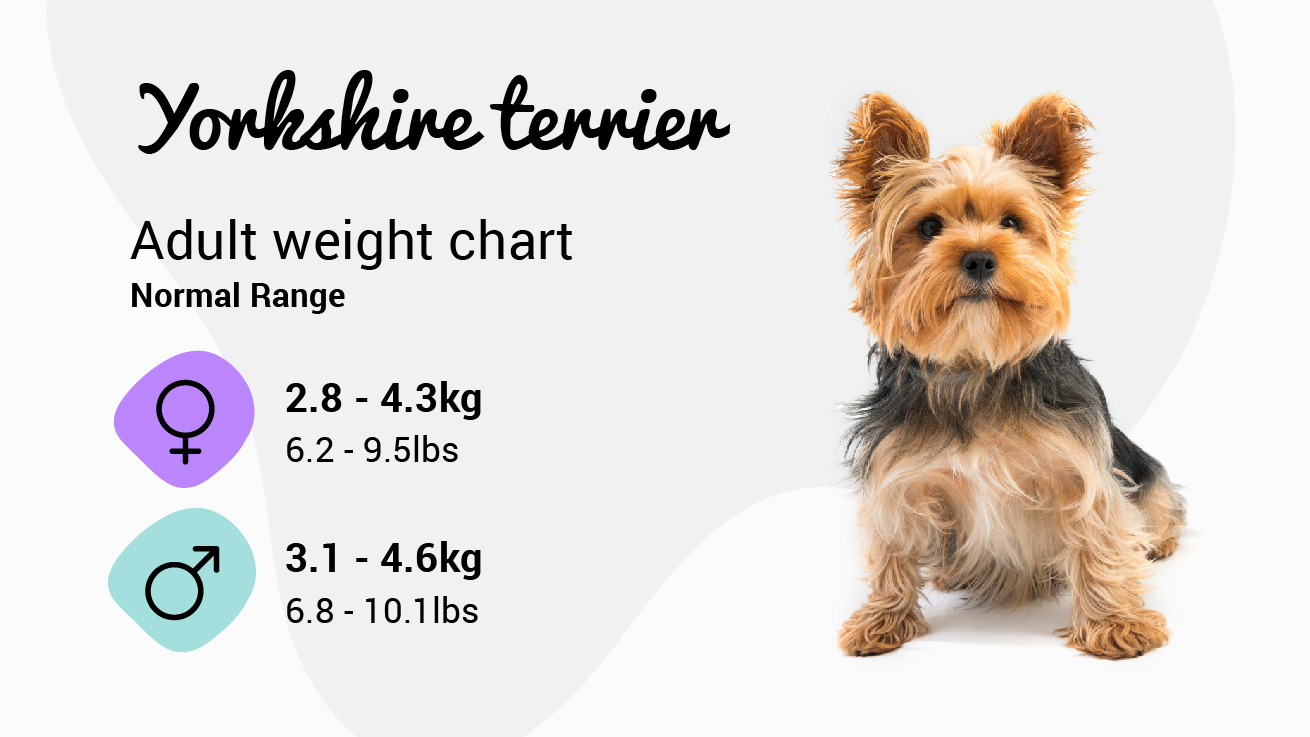
Adult (1 Year and Beyond)
Average Weight: 4-7 pounds (1814-3175 grams)
Growth: Maintaining stable weight
Factors Affecting Yorkie Growth
Several factors can influence a Yorkie’s growth and development. Understanding these factors can help you provide the best possible care for your pet.
Genetics
Genetics play a significant role in determining a Yorkie’s size and weight. Puppies inherit traits from their parents, so knowing the size of the parents can give you an idea of the puppy’s potential adult size.
Nutrition
Proper nutrition is essential for healthy growth. Yorkie puppies require a balanced diet rich in protein, vitamins, and minerals. High-quality puppy food specifically formulated for small breeds is recommended. Adult Yorkies also need a balanced diet to maintain their weight and overall health.
Exercise
Regular exercise is crucial for Yorkies, promoting healthy muscle development and preventing obesity. However, it’s essential to avoid overexertion, especially in puppies, as their bones and joints are still developing. Short, frequent walks and playtime are ideal.
Health
Certain health conditions can affect a Yorkie’s growth. Parasites, infections, and congenital issues can hinder development. Regular veterinary checkups and vaccinations are essential for maintaining your Yorkie’s health.
Environment
A safe and nurturing environment is crucial for a Yorkie’s well-being. Stress and anxiety can affect their growth and overall health. Providing a calm and loving environment can help them thrive.
How to Monitor Your Yorkie’s Growth
Monitoring your Yorkie’s growth is essential for ensuring they are developing properly. Here are some tips for monitoring their growth:
Regular Weigh-ins
Weigh your Yorkie regularly, especially during their puppy stage. Use a digital pet scale for accurate measurements. Keep a record of their weight to track their progress.
Visual Assessment
Observe your Yorkie’s body condition. You should be able to feel their ribs without seeing them prominently. If you can’t feel their ribs, they may be overweight. If their ribs are too visible, they may be underweight.
Veterinary Checkups
Regular veterinary checkups are crucial for monitoring your Yorkie’s growth and health. Your veterinarian can assess their development, identify any potential issues, and provide guidance on nutrition and care.
Growth Charts
Use a Yorkie growth chart as a reference to compare your puppy’s weight and size to the average ranges for their age. This can help you identify any potential deviations from the norm.
Common Growth Concerns in Yorkies
While most Yorkies grow into healthy adults, some common growth concerns can arise. Understanding these concerns can help you address them promptly.
Hypoglycemia
Hypoglycemia, or low blood sugar, is a common issue in toy breeds, especially puppies. It can cause weakness, seizures, and even death. Feeding your Yorkie small, frequent meals can help prevent hypoglycemia.
Legg-Calve-Perthes Disease
This condition affects the hip joint, causing the blood supply to the femur head to be disrupted. It can lead to pain, lameness, and muscle atrophy. Early diagnosis and treatment are essential.
Luxating Patella
Luxating patella, or kneecap dislocation, is a common orthopedic issue in Yorkies. It can cause pain and lameness. Regular veterinary checkups and maintaining a healthy weight can help prevent this condition.
Collapsed Trachea
This condition causes the trachea to narrow, leading to breathing difficulties. It is common in small breeds like Yorkies. Using a harness instead of a collar can help prevent tracheal collapse.
Dental Issues
Yorkies are prone to dental issues due to their small mouths. Regular dental care, including brushing and professional cleanings, is essential for maintaining their oral health.
Tips for Healthy Yorkie Growth
Ensuring your Yorkie grows into a healthy and happy adult requires proper care and attention. Here are some essential tips:
High-Quality Diet
Feed your Yorkie a high-quality diet specifically formulated for small breeds. Choose a puppy food that provides essential nutrients for growth and development. Transition to adult food once they reach their adult size.
Regular Exercise
Provide regular exercise to promote healthy muscle development and prevent obesity. Short, frequent walks and playtime are ideal. Avoid overexertion, especially in puppies.
Socialization and Training
Socialize your Yorkie puppy early to help them develop into well-adjusted adults. Enroll them in puppy classes and expose them to various people, animals, and environments.
Regular Veterinary Checkups
Schedule regular veterinary checkups to monitor your Yorkie’s growth and health. Vaccinations, deworming, and parasite prevention are essential for maintaining their well-being.
Dental Care
Provide regular dental care, including brushing their teeth and professional cleanings. This helps prevent dental issues and


